Explainer: The Difference Between a Motte-and-Bailey and a Stone Keep Castle
Two castles, fifteen miles apart, both raised by Normans within a generation of each other. One is a grassy hump ringed by a ditch. The other is a tower of stone you can still walk into. Visitors tend to assume the mound is the crude early version and the tower is what came next, and in broad terms that is right, but the reason has more to do with speed, money and politics than with anyone suddenly inventing better masonry.
Here is how to tell the two apart on the ground, what each was actually for, and where in the Midlands you can see both without driving more than an hour.
A motte-and-bailey castle is an earthwork. A steep artificial mound (the motte, from the Old French for "clod" or "turf") carried a timber tower, and beside or below it a ditched, banked enclosure (the bailey) held stables, workshops, a hall and the people who ran them. A stone keep is a masonry tower, usually square or round, that could fight, store, impress and house a household, often all at once.
The motte is the giveaway. If you are standing on a conical mound with a ditch that still holds water or shadow, and the surrounding banks trace an odd, angular shape in the grass, you are almost certainly looking at an earth-and-timber castle that was never rebuilt in stone.
After 1066 a small number of conquerors had to hold a large country. Earth and timber was the fast answer: dig a ditch, pile the spoil into a mound, ring the top with a palisade, drop in a wooden tower. A motte-and-bailey could be thrown up in a season using local labour and whatever oak grew nearby. It was cheap enough to build in dozens of places, which is exactly what happened.
These castles were not delicate. Timber towers burned, rotted and needed replacing, but a steep mound with wet ditches was genuinely hard to assault, and in the twelfth century the earthwork defences usually mattered more than the buildings on top.
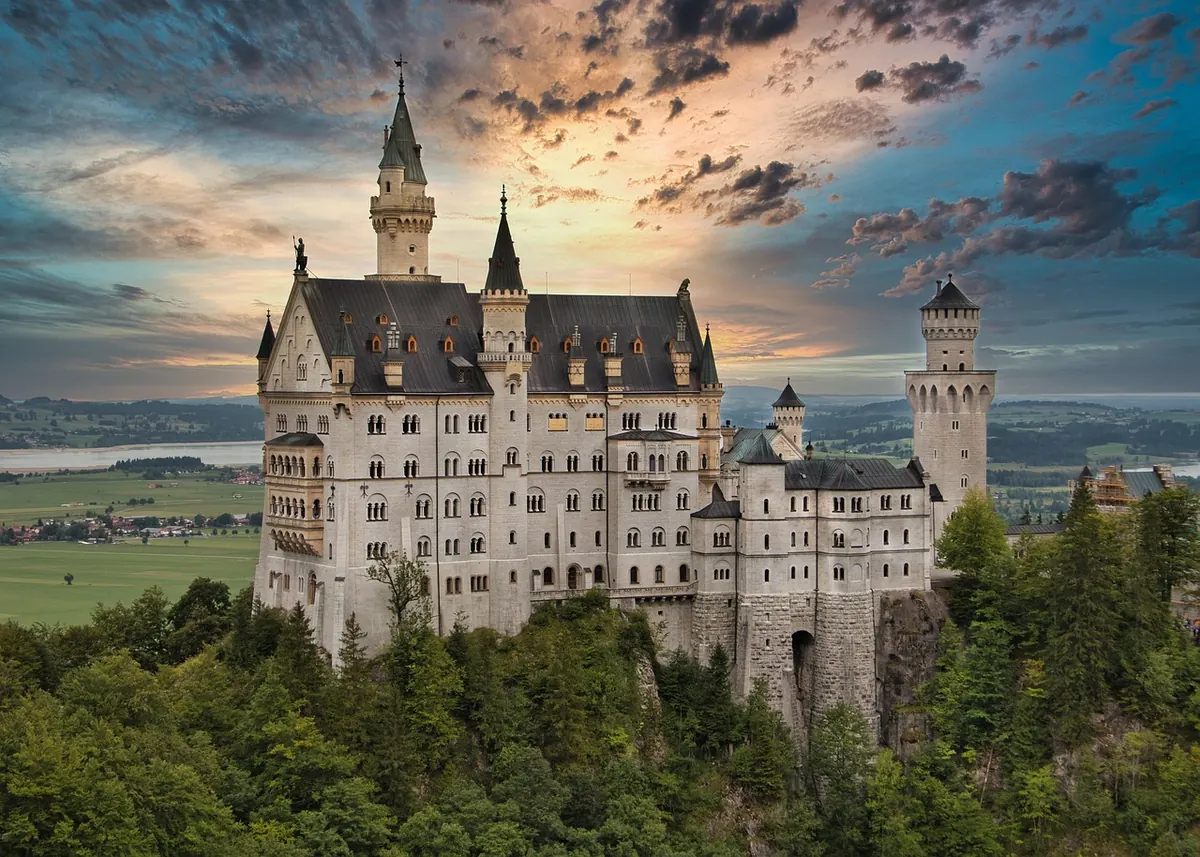
Stone was slower and far more expensive, so it was a statement as much as a defence. A keep gave you thick walls, height, secure storage, a chapel, a great chamber, and a garrison that could hold out for weeks. It also gave you a silhouette visible from the next valley.
Two things are worth knowing before you visit one:
By the thirteenth century the keep was already losing its job. Curtain walls, mural towers and strong gatehouses did most of the defending, and later keeps lean towards comfort: bigger windows, better fireplaces, more rooms to live in.
If you want to see the difference in one afternoon, these pair up nicely. Check opening times and access before travelling, as several are on private land or inside other attractions.
Earthworks are subtle, and flat light kills them. The single best condition is low sun, roughly an hour after sunrise or before sunset, raking across the ditch so every bank throws a shadow. Midday sun from above flattens the whole thing into an anonymous field.
Practical points that make a difference:
Masonry wants different treatment. Overcast light brings out texture in the stone without blowing out the highlights, while a hard blue sky gives you contrast and a shape worth silhouetting. Either works; decide which story you want.
Shoot from a corner rather than square-on, and keep the camera level so vertical lines stay vertical. If you must tilt upwards, expect converging walls and correct it later. Reflections in a moat or a wet ditch are a reliable composition, and details repay a second visit: arrow loops, putlog holes where scaffolding once sat, blocked doorways, chipped herringbone masonry. One wide shot plus three close details usually makes a better set than six near-identical views of a tower.
Walk the earthworks first and the keep second. On site, ask yourself three questions: where would the gate have been, where does the ground naturally defend itself, and which direction would an attacker have come from? The answers explain almost every choice the builders made.
Then check the basics: many castles are free and open at any reasonable hour, but others are ticketed, closed in winter, or surrounded by working farmland. Stay on marked paths, shut gates behind you, and keep dogs on leads around livestock. A quick look at the site's own page, or the local council's, saves a wasted journey.
Photo: muenzi1958 / Pixabay
Previous Post
Checklist: What to Bring When Exploring Ancient Ruins
Next Post
Common Mistakes in Local History Photography (and How to Fix Them)